3.3.2 Backup Power
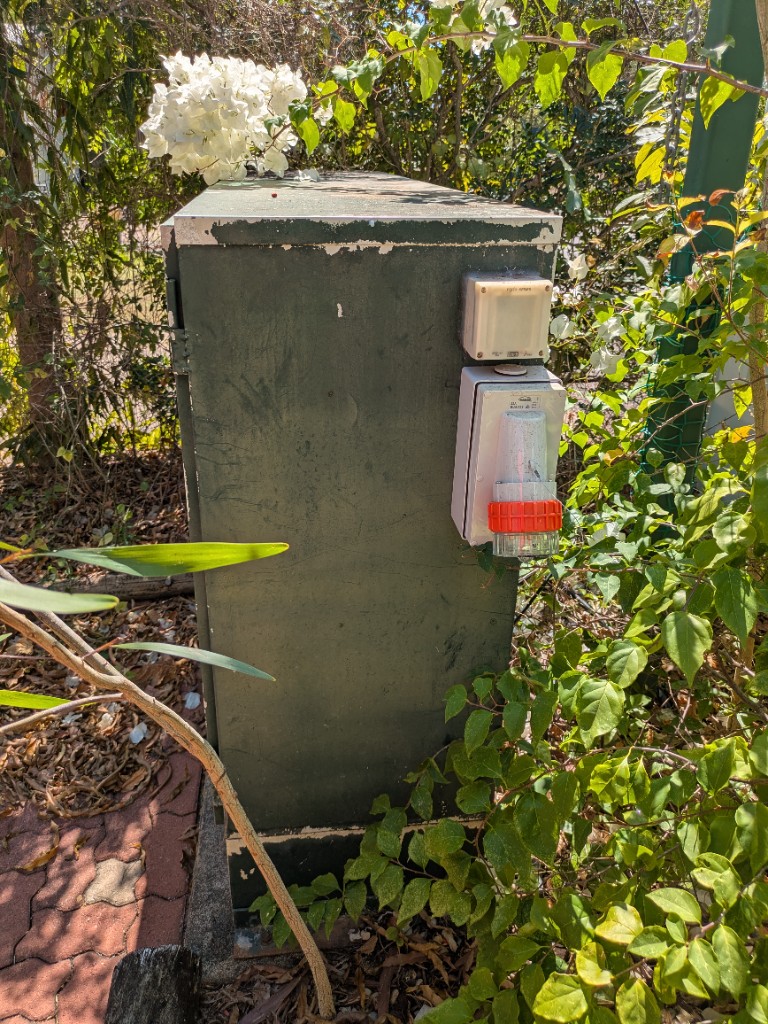
There is no permanent generator on site. During extended grid outages, critical estate infrastructure can be supplied by connecting a hire generator to the dedicated inlet at Distribution Board DB1 (east side, near unit 22).
Generator Inlet — DB1
| Item | Detail |
|---|---|
| Location | Distribution Board DB1 — east side, near unit 22 |
| Connection | External generator inlet mounted on DB1 enclosure |
| Generator size | Approximately 30 kVA, three-phase (hire unit) |
| On-site generator | None — portable/hire generator only |
See also 3.3.1 Grid.
What Keeps Working without Power
Potable Water Supply (gravity-fed)
Distribution from the hill storage tanks is gravity-fed and continues without mains power. Residents retain water supply from tank storage while levels allow.
Power is required only to run bore pumps and push more water up to the tanks for replenishment. How long storage lasts without replenishment depends on season and demand:
| Season | Approximate storage without bore refill |
|---|---|
| Dry season | ~3½–4 days (higher use / irrigation) |
| Wet season | ~30 days (lower irrigation demand) |
See 3.1.2 Storage Tanks.
Wastewater Treatment Plant (WWTP)
The treatment plant can remain offline for approximately 12 hours without immediate process failure, using on-site buffering.
What Fails First — Pit 1 and Pit 2 (≈12 hours)
The primary outage risk is Sewerage Pit 1 and Pit 2. These lift stations must regularly pump wastewater up to the treatment plant. Without power, they will back up after approximately 12 hours.
Connecting a generator at DB1 within that window restores pit pumps and WWTP operation before overflow or backup occurs.
Critical Loads (DB1 Generator Circuit)
When a suitable generator is connected at DB1, power is available for estate infrastructure circuits metered at DB1:
| Priority | Load | Why |
|---|---|---|
| Urgent (~12 h) | Pit 1 and Pit 2 lift pumps | Prevent sewer backup if not pumped to WWTP |
| Urgent (~12 h) | WWTP | Restore treatment after buffer period |
| Important (days) | Bore pumps | Refill hill tanks — gravity supply continues until storage is drawn down (see table above) |
Individual unit meters at DB1 (units 17–29) are not intended to be supplied via the generator inlet unless explicitly included in the trained changeover procedure.
Connection — Trained Personnel Only
Connection uses a simple three-phase plug at the DB1 generator inlet. A licensed electrician is not required, but the person connecting must have estate-specific training on:
- Where to connect the hire generator at DB1
- How to perform the changeover from grid to generator (and back to grid when mains returns)
- Post-changeover checks on all energised equipment — especially the wastewater treatment plant (pumps, controls, alarms, and normal operating indicators)
Training Required
Do not connect or change over the generator without completing this training. Untrained connection risks equipment damage, incorrect changeover, or missed faults at the treatment plant.
Document trained personnel and refresh training when the DB1 inlet procedure or WWTP controls change.
Who Can Connect
| Role | Contact | When to use |
|---|---|---|
| Site caretaker (trained) | Tim Earl — 0417 892 281 | Primary — on-site; trained on DB1 changeover and WWTP post-checks |
| Electrical contractor | Top End Electrical — 08 8945 5684 / admin@topendelectrical.com.au | If no trained person is on site |
| Estate committee | lakebennettcommittee@gmail.com | Coordinate hire generator, standby placement, and connection during outages |
Notify the committee when a generator connection is planned or in progress so owners can be advised and hire costs logged.
Future Documentation Required
A detailed written checklist and changeover procedure (DB1 connection, grid/generator changeover, post-changeover equipment checks — especially WWTP) is not yet published. The summary checklist below is interim only. Action: develop, review with Tim Earl and the committee, and publish as a linked procedure. Tracked on 5. Upgrades and Outages.
Changeover Checklist (summary — interim)
Full step-by-step procedure to be added in a future update.
| Step | Action |
|---|---|
| 1 | Position hire generator; confirm rating (~30 kVA, three-phase) and fuel |
| 2 | Connect three-phase plug at DB1 inlet per trained procedure |
| 3 | Perform changeover to generator supply |
| 4 | Post-changeover: verify Pit 1 and Pit 2 pumps, bore pumps (if required), and WWTP — controls, run status, and alarms |
| 5 | Monitor during outage; maintain fuel |
| 6 | On mains restoration: change back to grid; repeat equipment checks; disconnect hire generator |
Operational Strategy
Proactive — Severe Weather
When a severe storm warning is issued (cyclone, major storm front, or similar), arrange to hire a ~30 kVA three-phase generator and have it delivered and positioned on standby at DB1, ready for connection by trained personnel if the grid fails.
During a Power Outage
| Timeframe | Potable water | Wastewater |
|---|---|---|
| Immediate | Gravity feed from tanks continues | Pit 1 & Pit 2 pumps stop — levels rise |
| ~12 hours | Tanks still supplying (monitor level) | Connect generator — pits approach backup; WWTP buffer exhausted |
| 3½–4 days (dry) | Tank storage depleted without bore refill | Generator or pump-out contingencies required if still offline |
| ~30 days (wet) | Longer tank buffer (low irrigation) | Same pit/WWTP rules apply regardless of season |
Storm Season Preparation
Pre-positioning a hire generator before a known severe weather event avoids delay if roads or supply chains are affected after the outage starts.
When to Connect the Generator
- Severe storm warning — generator on standby at DB1; connect if power is lost
- Outage approaching 12 hours — connect before Pit 1 and Pit 2 backup (primary trigger)
- Extended outage in dry season — connect earlier if bore refill is needed before tanks run low (~3½–4 days)
For life-threatening hazards call 000. Network outages: Power and Water Corporation 1800 245 090 (see 1.4 Contact Information).
If No Generator Is Available
- Water: Conserve use; gravity supply continues until tank storage is used (season-dependent)
- Wastewater: Monitor Pit 1 and Pit 2 levels urgently after ~12 hours
- If storage or irrigation capacity is exceeded, follow 3.2.8 Effluent Disposal contingency — licensed pump-out via McMinns Pumping Systems 0408 895 171
- Contact ENVR Solutions 0402 524 033 for WWTP alarms or operational support (see 3.2.15 O&M and Contingency)
Hire Generator Requirements
| Item | Detail |
|---|---|
| Rating | ~30 kVA, three-phase, suitable for industrial inlet connection at DB1 |
| Earthing | Confirm earthing arrangement per trained changeover procedure |
| Runtime | Size fuel for expected outage duration; refuel only when generator is stopped and cool |
| Placement | Level ground, adequate ventilation, exhaust away from buildings; maintain clearance from DB1 inlet cables |
Testing and Records
- Exercise the inlet and changeover procedure periodically with trained personnel
- Record date, operator, generator details, post-changeover check results, and any faults in estate maintenance logs
- After restoration of grid supply, verify normal changeover back to mains before disconnecting hire generator
Version Control
| Version | Date | Description |
|---|---|---|
| 1.0 | 2025-10-06 | Initial Release |
| 1.1 | 2026-08-29 | Estate-specific DB1 generator inlet and critical loads |
| 1.2 | 2026-08-29 | Storm standby; gravity-fed water buffer; 12 h pit/WWTP limit |
| 1.3 | 2026-08-29 | Trained-personnel connection; changeover checklist; contacts (caretaker, Top End, committee) |
| 1.4 | 2026-08-29 | Flagged pending detailed generator changeover procedure |
| 1.5 | 2026-08-31 | Linked pending generator procedure to upgrades register |
Next Review Date: 2027-03-01